LiFePO4 vs lead-acid for a telecom BTS site
Cycle life, ambient temperature, theft risk and the real total cost of a −48 V plant over eight years.
The purchase price comparison favours lead-acid. Almost every other comparison does not.
Cycle life
A VRLA string in tower service, cycled daily on an unreliable grid, is often replaced within three years. LiFePO4 at the same duty routinely runs several times longer. Over an eight-year site life the replacement schedule dominates the cost model.
Temperature
Lead-acid loses capacity and life rapidly above 25 °C, and an equipment shelter in an Indian summer is nowhere near 25 °C. LiFePO4 tolerates the ambient better, which matters more than the datasheet capacity difference.
Weight and theft
A lithium string is a fraction of the weight for the same energy — easier to install up a tower access, and less attractive as scrap lead. On remote sites this is not a minor consideration.
What the BMS buys you
Our packs report state of charge and state of health over RS232/RS485. On a hybrid grid/solar/DG site, that telemetry is what lets the control unit decide when to start the generator — rather than starting it on a timer and burning diesel that was not needed.
The plant around it
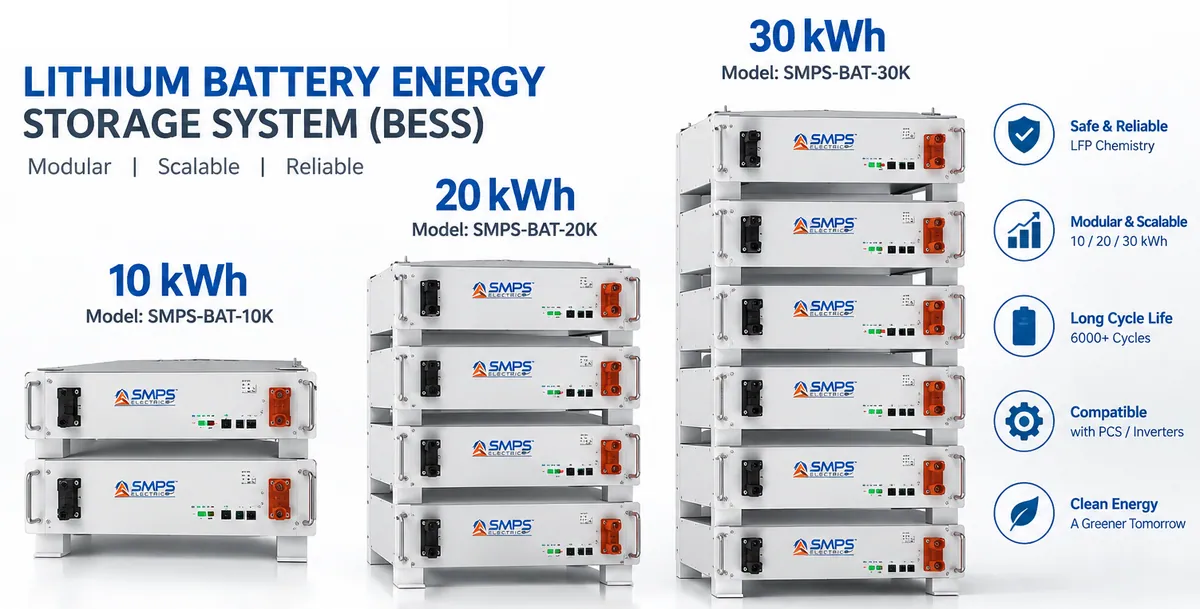
The battery is one element of a −48 Vdc plant. Line 07 provides the rectifier cassettes (50 A modular), the load and battery management, and the hybrid source arbitration, in 3 to 20 kVA. Lithium storage runs to 52 V and 1000 Ah.
Need this applied to your site?
Send the load profile and our engineers will answer with a configuration.
Discuss Your Project