Static vs regenerative electronic loads in production test
One turns your test energy into heat you then pay to remove. The other sends it back to the 230 V line.
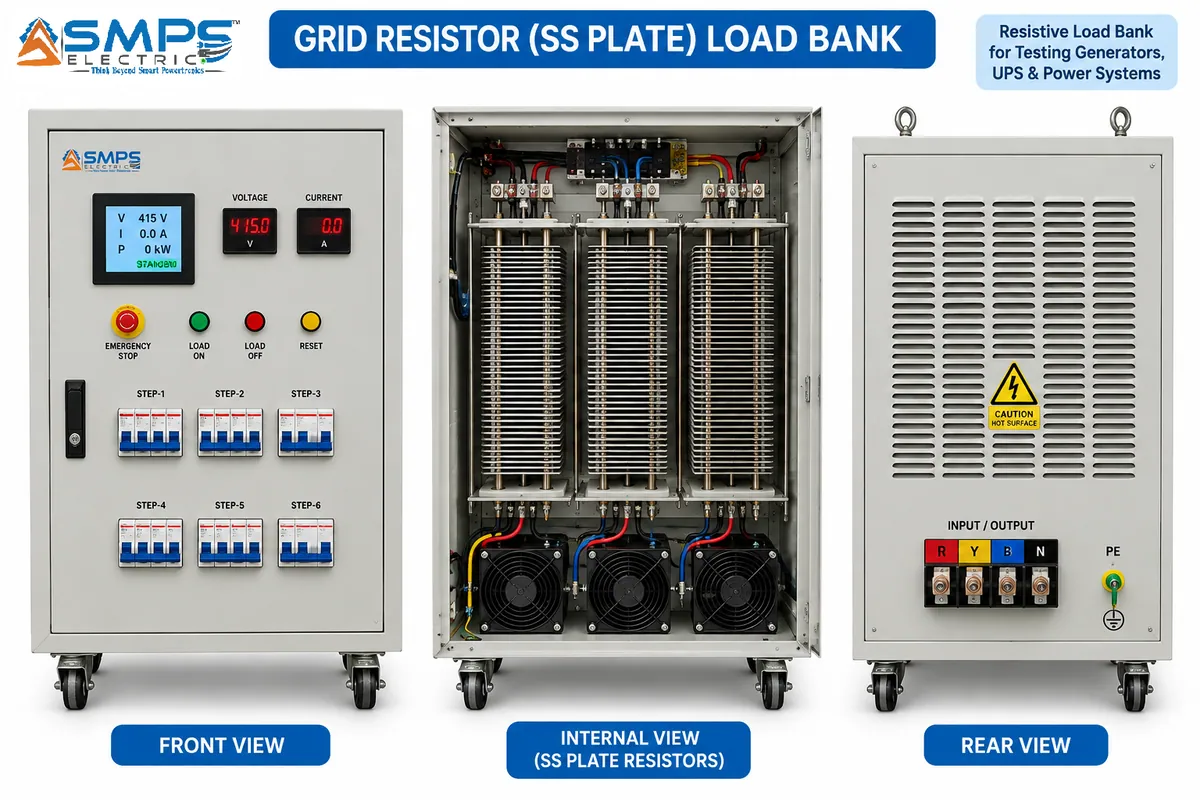
An electronic load absorbs power from the unit under test. What it does with that power afterwards splits the category in two.
Static loads
A static load dissipates the energy as heat. Simple, cheap, and entirely adequate for low-power benches.
The bill arrives twice. You pay for the energy, and then you pay again for the air conditioning that removes it from the room. On a burn-in rack running many units for hours, that second bill is not small.
Regenerative loads
A regenerative load converts the absorbed energy and returns it to the 230 Vac supply. The test still happens; the energy mostly goes back where it came from. Heat rejection in the test area drops sharply, which often matters more than the energy saving itself.
Choosing between them
- Low power, occasional use — static. The payback on regeneration will not arrive.
- Continuous burn-in, many channels, or a hot room — regenerative, and the case is usually made on cooling load rather than on the meter.
Our specification
0 to 150 Vdc, 0 to 120 A, available static or regenerative. We use these on our own line to validate every unit before it ships, and we build test rigs around them for customers doing charger, PSU and battery production test.
Need this applied to your site?
Send the load profile and our engineers will answer with a configuration.
Discuss Your Project